Friday, December 18, 2015

It's the FInal Countdown

So the semester has come to an end. It has been an eventful 15 weeks so far. A description would be a roller coaster ride of events, activities, lesson plans, unit plans, blog entries, reflections, laughs, tears, and smiles. I would like to start off by saying thank you to Dr. Smirnova. You have given me the tools I will need to be successful in my teaching career as both an elementary teacher but also as a social studies teacher. I would also like to thank my fellow colleagues for all your help in getting through this semester.  I would not have been able to make it through this experience without each and every one of you. I know you all will be amazing teachers! WE DID IT!!!


I started off this semester thinking I was taking a normal methods course. I knew it would be more challenging than most because I had taken a previous class with Dr. Smirnova and she expects nothing but the best from her students. I wish I had had a organization plan in place before the course started. I had a huge organization problem in the beginning. Even though I had a binder, the eclass format was throwing me off that I had to stay connected to my laptop. I knew I had to this based off Dr. Smrinova's previous class but it still was a transition.

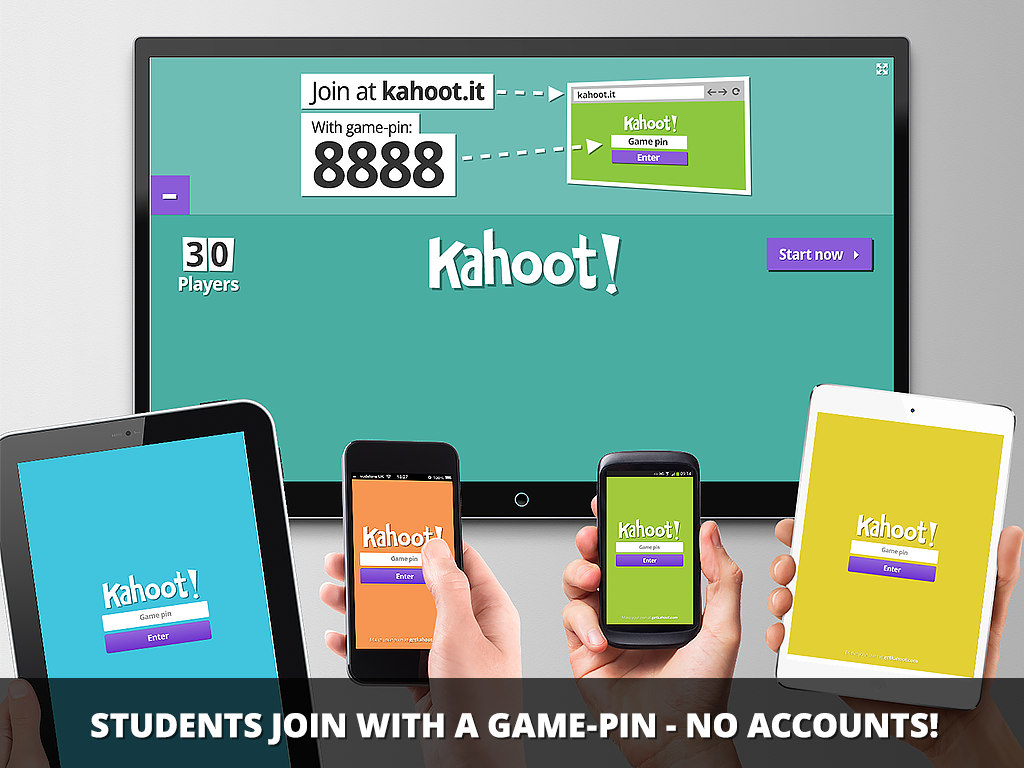
All in all, we learned many helpful tools we can use in our future classrooms. My personal favorites were the artifact bags, the use of NEWSELA, which I have seen used in the classrooms I work in, Kahoot, Prezi and how to develop an effective unit plan. I feel very prepared to go into my student teaching experience. Even though I will not be student teaching until Fall 2016, I am now equipped with the tools and techniques I can practice next semester in order to be even more prepared.


The edTPA is one of the biggest and I feel even more prepared now that I have completed ed5535. The efolio was tough and time consuming, but it was effective is showing what will be expected once I am in the midst of my student teaching. I hope everyone takes Dr. Smirnova's class with an open mind and understands that the amount of work is meant to challenge us and make us better teachers than we were when we came into her course.


I wish everyone good luck in their upcoming semester and their student teaching!! You will all do great things!!

-Lauren

Tuesday, December 15, 2015

Efolio makes a great guide!

"Education is the kindling of a flame not the filling of a vessel" -Socrates

The efolio assignment this semester has been very effective in preparing me for the edTPA that will be expected during student teaching. edTPA is a huge portion of the teacher certification process. Having the ability to practice imputing our lessons gives us an advantage. 

Task 1 was not too intimidating because it was only a matter of imputing the lessons. Task 1 part E includes the lesson plan format broken down into smaller segments. This section was the heftier part of the section because you have to reflect on why you chose to implement this lesson. It was time consuming because it seemed to be asking you to reflect on the same parts of your lessons but used different language to ask. 

Task 2 and Task 3 involve uploading the observation videos and student work and assessments. Watching myself in a video was uncomfortable. I had to watch it a few times before I could watch it straight through without wanting to turn it off. Even though it was an uncomfortable experience I feel I can learn from watching myself. I know that I fidget with my hands too much and I need to work on having relaxing body language in front of the students. 

I feel the efolio assignment was a great experience. I am not going to be student teaching until the Fall of 2016 and I feel this will help me prepare for what will be expected of me in the edTPA. I will be able to reference this efolio during the spring semester and "practice" some more before I start the student teaching process.  

Sunday, December 13, 2015

The Great Debate

For our current event project, we chose to use debating as a technique for teaching current events. When I was in elementary school, I remember having to read a current event article and find the 5 W's of that article. We thought that by incorporating debates into current events would make the content more interactive and meaningful for the students.   

First, we went over how to participate in a debate. We model a debate format by showing a video relevant to our audience. Next, we introduced a topic to our "students" and informed them that they would be responsible for debating on this topic. In order for this debate to go smoothly, our students needed to follow the debate format. I felt we learned a valuable strategy for teaching current events to our future elementary students.  

We used NEWSELA as a resource during this project. I enjoyed the NEWSELA website. I felt that they shortened articles enough for students to understand and follow the content. I also liked that there was an option for a quiz after each article. This would allow each student to become independent in their learning. In my future classroom, I can see myself using this resource in my classroom. It is student friendly, informative, and also up-to-date on current issues going on in the world. Our students will be the future citizens voting for laws, presidents, and public offices. They need to be informed of their community and of the world. Teaching them to have an interest in current events at a young age will give them the tools they need to be positive citizens in the future.  

Mock interviews

What I learned this week is that the interview process will be stressful once I complete my student teaching experience. The mock interviews we completed in class were interesting to say the least. I honestly was not prepared for the types of questions that were going to be coming my way. 

I approached "studying" for the mock interview more like a final exam. I understood the social studies content, 5 elements, pedagogical knowledge, and the format of a lesson plan. What I was not prepared for were the questions requiring me to come up with a lesson on economics on the spot. I knew that when I would be interviewed in the future I would be asked about my teaching methods and approaches to learning but for our class I was caught off guard. 


The questions my peers asked were very thought provoking. I now know what to go over before I go into a job interview in the future. Even though I already have a teaching assistant position, the questions the principal asked me were more towards my ability to assist the teachers. I can now start preparing myself for those lesson plan questions and hopefully better my chances of getting a job after student teaching. 

Making old things new again

Artifact
a simple object (such as a tool or weapon) that was made by people in the past
(Learnersdictionary.org)

This semester we developed many different inquiry lessons involving strategies for our students to have a better understand of social studies. A particularly interesting inquiry lesson, was the use of artifact bags in the classroom. 

half_moon_e.jpg

The previous four pictures are of the artifacts I chose to show to my peers in order to present the artifact bag lesson on Henry Hudson. We were to choose 3-4 artifacts and have the "students" explore why these artifacts are important. What made me pick these artifacts instead of others? What can we learn based on the artifacts? 

The students explored each artifact, using research techniques and the internet. Their task was to find out about the artifact individually and then come back and figure out why it was important to Henry Hudson's exploration. The students were to fill in the 5 W's on each artifact and would then write a paragraph about one artifact and it's importance to the voyage. 

I found this lesson to be fun to create. I feel the students would really enjoy this type of lesson because it is engaging and interactive. I would use this lesson as an introduction to Henry Hudson instead of a lesson after instruction has already occurred. 

Monday, December 7, 2015

Native American Tribes

Clan House | by roger4336

We were tasked with researching the Native American Tribe known as the Tlingit Tribe. The Tlingit tribe is located on the coast of Alaska and their lifestyle is affected by the geography of the land. The project was a collaboration as all our projects are this semester. Carielle and I each divided the work into equal parts and decided to teach each other about the content once our portions were complete. 

I enjoyed this project because it allowed me to learn about a Native American tribe I did not have much knowledge on. Growing up in the Hudson Valley, students are taught about the Algonquin tribe and the Delaware tribe. There is normally a brief overview of the tribes of the plains but not much is talked about the tribes in the north west. I enjoyed learning about the Tlingit tribe and can see myself incorporating this into my classroom instruction. Carielle and I delivered the content via direct instruction, but if I were in an elementary classroom I would use the inquiry model or cooperative model to present the content. My students can  show their understanding of the information by presenting their findings or activities to the class.

In all, I feel this assignment was important for my understanding of Native American history as a whole. 

Monday, November 30, 2015

Economics in the classroom


Today we focused on the topic of economics in the social studies curriculum. Everyone in my class was responsible for researching a portion of the presentation. The format of this presentation was a direct instruction lesson with elements of JIGSAW incorporated. The only experience I have with economics is through my life experience of working. 

In high school I had a brief half semester course going over economics but it was not very effective or meaningful since I do not recall much. My portion of the presentation focused on economics as a whole and ways to incorporate it into everyday instruction. I enjoyed coming up with ways to explain economics to first graders and second graders. Even though the topic of economics is hard to grasp, I feel it is important for students to have a genera understanding of it in order to be positive members of their community. 

Thursday, November 12, 2015

Always have a back up plan

During our unit plan instruction, Carielle and I had planned on using the program called Kahoot in order to assess our students prior knowledge. Kahoot is an interactive website where teachers or presenters create multiple choice questions and their audience responds using a tablet, computer or smart phone.

It did not go as planned. The tablets provided were not functioning properly in order to access the Kahoot app. Carielle and I had to improvise. We decided we would use whiteboards and dry erase markers instead and ask the question orally to the students. It seemed to go smoothly for the most part. I wish the tablets had worked because we would have gotten through our pre-assessment quicker and we would have had less off task behavior. As I have learned in life, but definitely in teaching it is always good to have a back up plan. 

Voices from previous years

This week we focused on the topic of geography and we also reviewed collaborative and cooperative learning. The media that Dr. Smrinova chose for us to show our understanding was a program called voice thread. 


Voice thread is a program where many individuals can come together to brainstorm ideas. In the voice thread, you are able to add your perspective or comments via text, video, audio, or uploading a file to the particular slide. I enjoyed voice thread. I think it would be highly functional at the middle school and high school level. The students would be given a topic and each student would have to provide their opinion, understanding, or perspective. I feel this program really showed how teachers can use technology in their classrooms. 

Meaningful learning


Two weeks ago, we developed a lesson that encouraged the students to take a creative perspective to history. The students were given the task of creating a brochure for the Hudson Valley. The students were split into groups of two or three and each were given a specific topic to focus on. The group Carielle and I worked with, focused on the historical aspects of the Hudson Valley. I found the students were engaged throughout the entire lesson and time seemed to fly by. At the end, each group came together to present their brochure. I came away learning some interesting facts about the Hudson Valley that I did not know before that class. 

Thursday, November 5, 2015

The Reflection Process


To say our unit plan did not go smoothly is an understatement. It was one of the biggest learning experiences of my graduate career so far. I thought the quote above perfectly summed up how I felt that day leaving Bishop Dunn Memorial School. I left with a bitter taste in my mouth about education. It took me a few days to understand the bitterness is a part of the entire experience. 

Carielle and I decided to focus on Henry Hudson as the main topic for our unit plan. Our direct instruction lesson was primarily made up of vocabulary words and looking back now I would have changed that. I would have focused more on the content of Henry Hudson instead of the important words the students would encounter. Due to the imperfections, I feel as though our lessons were not as profound as they could have been. We had this great plan in our heads how everything would occur, but as is life, it did not go as planned. Even though I feel our instruction could have included more content, the students were engaged. We used an interactive website from National Geographic regarding Henry Hudson to engage our students in the lesson. I feel this gave the students a visual representation of Henry Hudson's voyage into this region. 

I really enjoyed working with Carielle as a co-teacher. I feel we worked well together. We were able to get over the humps of the day together and work through the kinks. I feel we also balanced each other out when it came to instruction. Carielle would speak about a certain portion of the lesson and then pass it off to me. When it came to designing the lessons, we also worked extremely well together. We bounced ideas off one another and collaborated for the entire process. 

All in all, I feel we have much we could improve on. Yes, I did leave Bishop Dunn that night crying and feeling negative about my future as a teacher, but once I took time to reflect authentically, outside the moment, I realized I learned something. I learned that I need to take criticism better. I also learned I need to focus on content, even when I do not particularly care for the topic. Ultimately I will be teaching every content area so I need to be able to create lessons that are meaningful and intriguing for my students even when I am not confident in the subject area. 

Tuesday, October 13, 2015

Stressed is Desserts Spelled Backwards

So far it has been a stressful few weeks gathering the information Carielle and I need for our unit plan. Our topic is The Age of Exploration, specifically in the Hudson Valley. Originally, this topic had us both questioning where we should start researching. The conclusion we both came to was Henry Hudson was our main idea of our unit plan since he is the person the Hudson River is named after and who explored, what we know as the Hudson Valley today.


Since we wanted to focus our three lessons on Henry Hudson, we now needed to break that concept down even further and decide what topics of Henry Hudson did we want the students to leave the class having learned. The first topic was the vocabulary used in many articles we read on the topic. We wanted the students to have a fundamental understanding of the words used to describe Henry Hudson and his exploration. The second topic was focused on the different voyages he took and the trail and errors behind each voyage. This lesson looked at distance and motivation for each of Hudson's trips. The final lesson, we felt was used to wrap up the entire unit as a whole. This lesson employed the students to draft a timeline of the specific voyage they focused on in lesson two and describe what he "saw" and came in contact with during that voyage.

We teach this unit next Monday October 19th. To say I am stressed or nervous is putting it mildly. I am beyond nervous for this experience. Although I know I will be a ball of jitters all day Monday, I know this experience will prepare me for my student teaching experience in the Fall of 2016.

Look for my blog next Monday after!

Sunday, September 20, 2015

All About Assessment


This week I read many articles about assessment. Since I am in my third year of graduate school, I have heard the term assessment used many times. I thought I had an understanding of what it was and how to implement it in a classroom, but I did not realize there are many different aspects and types of assessment. Depending on the dynamic of your classroom and the content you are teaching, one type of assessment might make more sense than another type.

There are three types of assessment. Diagnostic is the pre-assessment. This involves the teacher using different tools to find out if a student has any prior knowledge on a particular content. Self-evaluation and KWL charts are appropriate for this assessment. Formative is the idea of providing feedback that helps people improve or guide them further into learning. The teacher plays a huge role in this type of assessment. The student relies on the information provided from the teacher in order to make corrections. Summative is the type of assessment everyone is familiar with. This assessment occurs in the form of a test that attempts to summarize what has been learned at the end of a lesson or unit. This type of assessment is so familiar because an example is standardized tests. Here is a cartoon that I felt encompassed the feelings behind summative assessments and the importance in giving feedback.


As educators it is our duty to be aware of our students strengths and weaknesses and develop lessons to guide them into further learning. I feel if I am able to use all three types of assessment properly my students will not only have gained more knowledge but will not feel stressed or panicked about assessments.


Saturday, September 19, 2015

Learning, thinking and creating

This past week in class we introduced ourselves to one another using technology. Our presentations varied in presentation, description, and personal items shared. This project format allowed me to learn new information about my classmates while learning about a type of technology or website I can use in my future classroom. Here is a look at the website, called Prezi, I used to introduce myself.

This is a great video of a Teen TED talk on learning, thinking and creating. This young mans speech makes you question many things we have come to know about learning.


"Thorndike used this simple experiment to illustrate the role of feedback in learning. Without it, we can't evaluate our actions and hence are unable to improve." this quote was taken from the reading assignment on the conceptual framework for authentic assessment. Thorndike theorized that in order to understand a topic, a person must receive feedback. The video above questions this theory. Jared Barnett shows examples of how learning, thinking and creating do not need to receive feedback in order to develop an understanding. He spoke about Issac Neuton who did not have feedback during his development of laws of physics. I enjoyed this TED talk because it made me question the ways of learning I have come to understand over the course of my education. I hope you will watch this video and take away a little piece of new understanding or can go out and "Learn, think and create" something you are personally interested in. 

Wednesday, September 2, 2015

Buckle Up for a Rewarding Experience

The craziness begins! It is August 31, 2015 and I am starting on the journey through my last year of graduate school. This blog will reference my experience during my Social Studies method course, as well as my knowledge on education from previous classes. This blog will also share my experiences with my peers as well as with the students I will be working with in my fieldwork.

This course will be heavily focused on technology and the impact it has on student learning and teacher instruction.I am particularly interested in learning ways to use technology to bring information to students. The students I will be working with are surrounded by technology; such as the internet, gaming systems, iPads, computers, iPhones, etc. We should allow the students to use their creativity in developing projects, presentations and homework digitally.

After reading the article on essential questions by Grant Wiggins titles "On genuine vs. bogus inquiry- using EQs properly" spoke about the importance of allowing our students to develop their own answers to these important questions. Many lessons revolve around an answer the teacher or the test is looking for; lessons should revolve around these open ended essential questions to help further the future generations knowledge. Technology will help our students in researching these questions and possibly coming up with there own essential questions. We, as educators, need to be open minded to the use of technology in the classroom because whether we like it or not that is the way the education system is heading.

Resources
Wiggins, G.(2013, Feb. 8). On genuine vs. bogus inquiry-using EQs properly. Retrieved from  https://grantwiggins.wordpress.com/2013/02/08/on-genuine-vs-bogus-inquiry-using-eqs-properly/